

Concrete Bathroom Vanity | Model C0001
Concrete Bathroom Vanity | Model C0001
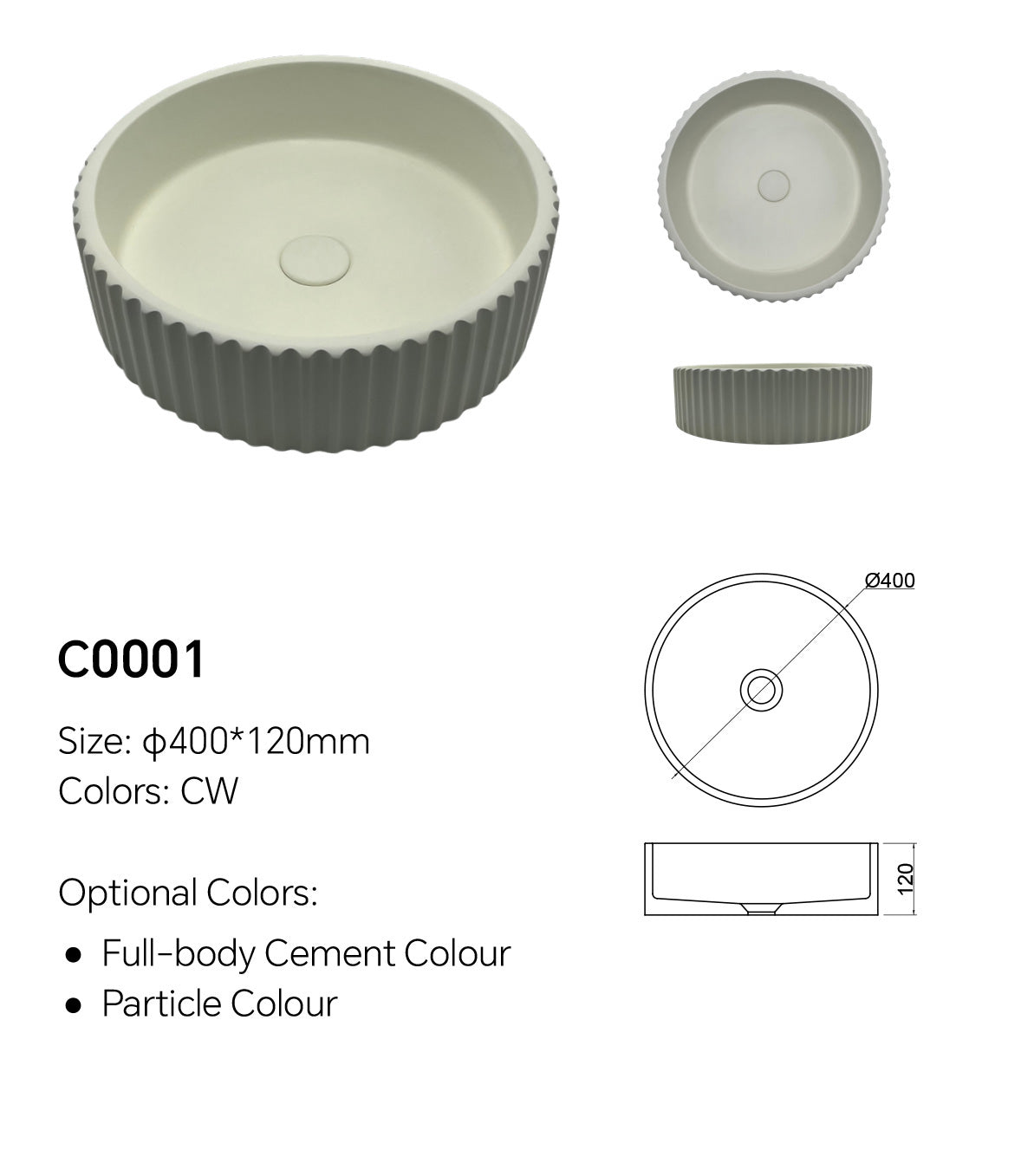
This concrete bathroom vanity basin is a round, countertop concrete sink designed for project-based applications requiring controlled dimensions and repeatable production.
Overall size: Ø400 × 120 mm, suitable for standard countertop installation and centralized drain configuration.
Manufactured by SANIKB, Model C0001 is available for OEM & ODM supply with customizable concrete color options.
Materials and care
Materials and care
Merchandising tips
Merchandising tips
Share
Concrete Bathroom Vanity Scope and Project Fit
A concrete bathroom vanity is specified when projects require a consistent concrete surface, controlled size, and repeatable results across multiple units. Compared with granite or traditional bathroom vanity materials, cast concrete supports defined edges, standardized holes, and stable form control within a mold system. This makes a concrete vanity suitable for project procurement where space planning, counter integration, and material behavior must be verified early. For B2B sourcing, the focus is not “create at home,” but how the material performs, how the surface is finished, and whether production can continue across reorder cycles.
Cast Concrete Process, Mix Control, and Curing Stability
Concrete vanity production depends on process control: material mix, mold form, vibration, reinforcement placement, and controlled cure cycles. These steps directly impact strength, surface consistency, and long-term stability. DIY concrete vanity methods often vary by supplies, pour timing, and dry conditions, which leads to uneven results. Factory casting reduces variability by controlling mix ratio, vibrated compaction, and curing parameters to achieve stronger, repeatable concrete sink and concrete countertop output. For project use, this means predictable performance and fewer installation adjustments.
Sealed Surface, Finish Options, and Water Management
A concrete surface must be sealed to manage water exposure in bathroom applications. Sealed concrete reduces absorption, improves clean maintenance, and supports consistent finish appearance across production batches. The goal is not “smooth at any cost,” but a controlled finish that meets project standards. Concrete top and concrete countertop components are evaluated by surface sealing system, finish uniformity, and edge durability. Color range and texture can be customized under OEM/ODM programs, but batch control is required to avoid variation across multiple orders.
Size, Installation Space, and OEM/ODM Repeatability
Concrete vanity sizing affects installation space, counter compatibility, and drain alignment. Standardized size control supports faster installation and reduces on-site rework. For narrow layouts, edge clearance, bowl depth, and hole positioning must be locked before production. SANIKB supplies concrete bathroom vanity products as repeatable models for OEM/ODM sourcing, where the objective is not one-off making, but documented specifications, controlled materials, and stable production that can continue over time. This approach supports long-term projects and structured reorder planning.
FAQ
Is this concrete bathroom vanity intended for OEM and project procurement?
Yes. The product is structured for B2B sourcing where repeatable production, documented specifications, and controlled materials matter more than one-time customization.
How do you control concrete mix and casting consistency across batches?
We control material mix ratio, casting form stability, vibration compaction, reinforcement placement, and cure conditions to reduce variability and keep results consistent.
Can you support a concrete vanity top or concrete countertop configuration?
Yes. Concrete top and concrete countertop configurations can be evaluated under OEM/ODM scope, with priority on size control, hole positioning, and counter integration.
Is the concrete surface sealed for bathroom water exposure?
Yes. The concrete surface is sealed to manage water contact and support cleaning requirements, with finish control aligned to project standards.
Can drain holes and faucet holes be customized?
Within OEM/ODM parameters, hole position and diameter can be customized based on the project’s countertop and plumbing layout, with drawings confirmed prior to production.
What is the main risk difference vs DIY concrete vanity top approaches?
DIY processes often vary by supplies, pour timing, cure environment, and sealing method, which can cause inconsistent results. Factory production reduces risk through controlled casting and repeatable parameters.
What size and space information do you need before production?
We typically confirm target size, countertop thickness, installation space constraints, edge clearance, hole layout, and any pairing requirements with wood cabinetry or other materials.
How do you manage color range and finish repeatability?
Color range and finish are managed through controlled material formulation and defined finishing steps. Batch-to-batch consistency is treated as a production requirement, not an optional feature.