

Why Choose a Concrete Vessel Sink?
Sculptural Bathroom Sinks Crafted for Longevity & Design Control
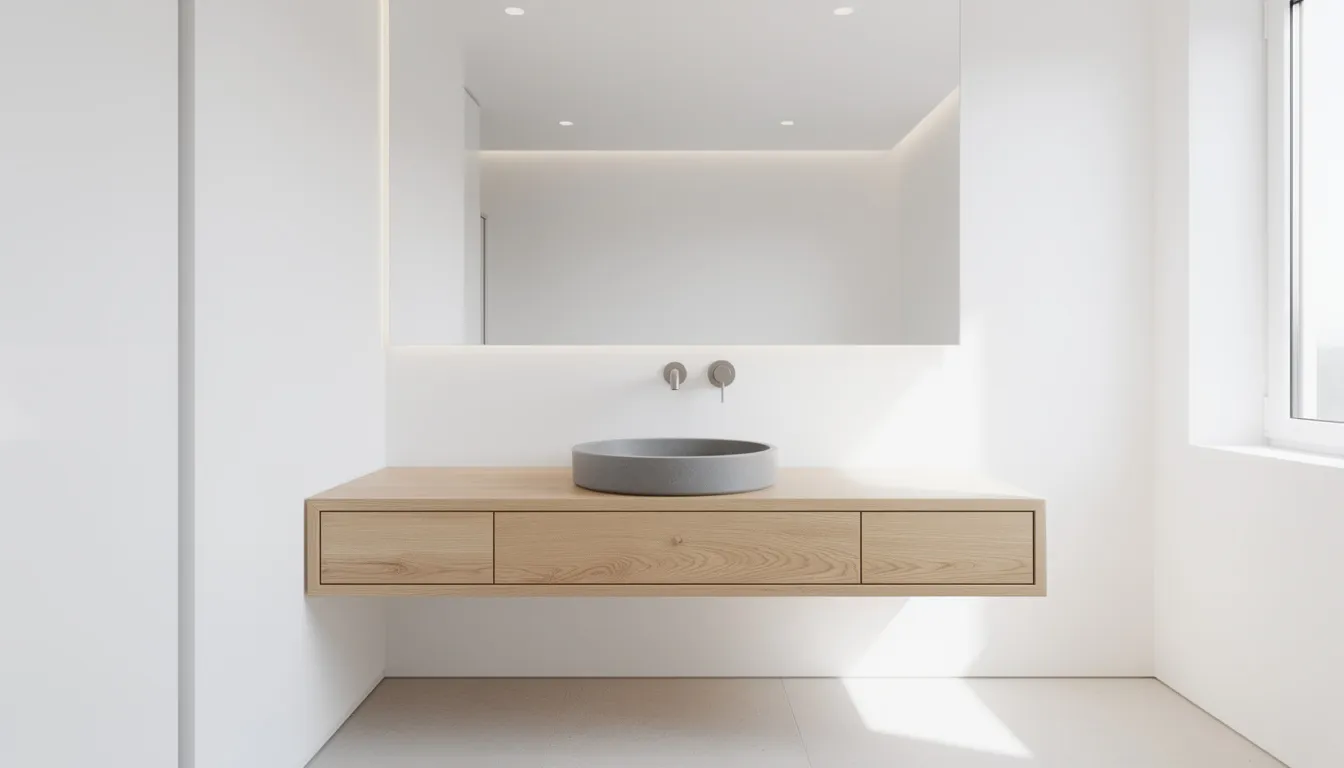
A concrete vessel sink is an above-counter bathroom basin crafted from high-performance concrete and designed to sit fully exposed on the countertop surface. Unlike recessed or undermount sinks, vessel sinks emphasize form, texture, and material presence — making the sink itself a defining architectural element rather than a background fixture.
In modern bathroom design, concrete vessel sinks are chosen not only for their visual impact, but for their ability to deliver custom size, shape, finish, and color options that standard ceramic or porcelain sinks cannot provide. When properly engineered and sealed, concrete sinks offer long-term durability, resistance to everyday bathroom use, and a natural beauty that improves with time rather than degrading.
Why Choose a Concrete Vessel Sink?
Concrete vessel sinks combine sculptural design freedom with practical performance, making them especially effective in powder rooms, primary bathrooms, and design-forward residential or hospitality projects.
Key reasons designers and buyers choose concrete over conventional vessel sinks:
- Natural beauty with depth
Concrete surfaces feature subtle tonal variation and handcrafted texture that porcelain and glass cannot replicate. Each sink carries a unique character while maintaining dimensional consistency.
- Design flexibility in limited space
Because vessel sinks sit above the countertop, they maximize visual impact without increasing cabinet footprint — ideal for compact bathrooms where every element must justify its presence.
- Custom shapes and proportions
From round and oval bowls to rectangular and soft-square forms, concrete can be cast into precise shapes without the tooling limitations of ceramic production.
- Longevity and resistance
Modern concrete formulations deliver strong resistance to water exposure, temperature fluctuation, and everyday use when paired with professional sealing systems.
Concrete Vessel Sink Shapes & Styles
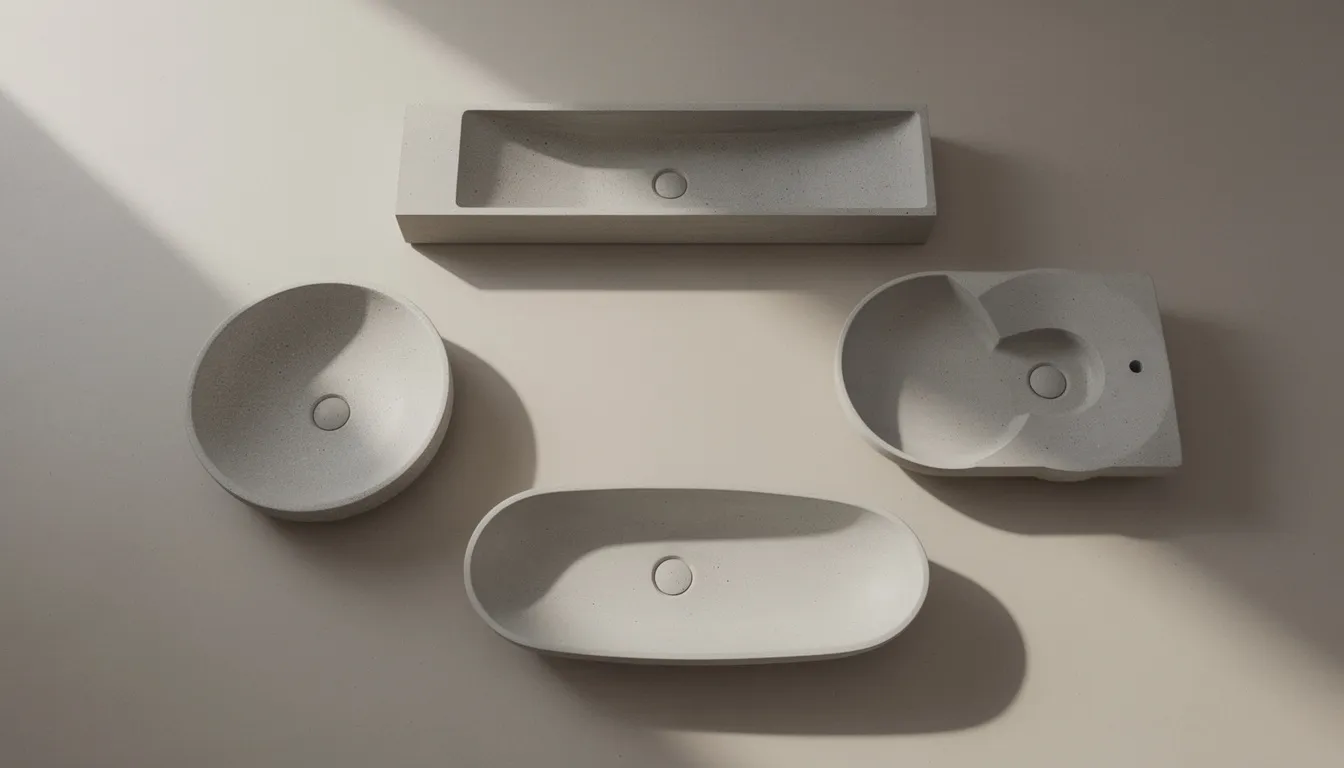
Concrete vessel sinks are available in a wide range of shapes and styles to suit different bathroom layouts and design goals.
Common shape options
- Round concrete vessel sinks
A timeless option for compact bathrooms and powder rooms. Round shapes soften visual lines and reduce perceived bulk.
- Oval vessel sinks
Offer increased interior space while maintaining a gentle profile. Ideal for single-user vanities requiring better splash control.
- Rectangular concrete vessel sinks
Clean lines and architectural presence make rectangular sinks a favorite for modern and minimalist bathrooms. Longer rectangular vessels can support dual faucets.
Each shape can be customized in size, edge radius, and wall thickness to match countertop proportions and faucet placement.
Size, Color & Finish Options
One of the defining advantages of concrete vessel sinks is the ability to choose size, color, and finish independently, rather than adapting a design to fixed product dimensions.
Size considerations
- Common diameters and lengths range from 16” to 30”, with larger trough-style sinks available for shared spaces.
- Bowl depth typically ranges from 3.5” to 5”, balancing water capacity and splash resistance.
Color & finish
- Neutral tones such as light gray, charcoal, bone, and sand remain the most requested finishes.
- Pigmented concrete allows for controlled color variation while maintaining a natural appearance.
- Matte and satin finishes are preferred for their ability to minimize visible water spots and fingerprints.
Durability, Scratches & Stain Resistance
Concrete sinks are often misunderstood as fragile. In reality, modern concrete vessel sinks are engineered products designed to perform reliably in bathroom environments.
- Scratch resistance
Normal use — including jewelry contact, toiletries, and routine cleaning — does not damage a properly sealed concrete surface. Abrasive tools and harsh chemicals should be avoided.
- Stain resistance
Professional sealers create a protective barrier that resists water absorption and staining from soap, toothpaste, and cosmetics when spills are cleaned promptly.
- Water exposure
Concrete sinks are fully compatible with daily water use and hot tap temperatures. Proper sealing is essential for long-term performance.
Over time, subtle surface changes may occur. This natural aging is considered part of concrete’s character rather than a defect.
Wall-Mounted vs Countertop Vessel Installation
Concrete vessel sinks are compatible with both wall-mounted faucets and deck-mounted faucets, depending on layout and design intent.
- Wall-mounted faucets create a clean countertop surface and emphasize the sculptural form of the sink.
- Deck-mounted faucets offer flexibility in retrofit applications and simplify plumbing adjustments.
Drain placement and countertop thickness should be confirmed before ordering to ensure proper alignment and installation.
Concrete Vessel Sinks Compared to Other Materials
When choosing between concrete, porcelain, or stone vessel sinks, the decision comes down to design control, longevity, and customization.
- Concrete vs porcelain
Porcelain offers uniformity and low maintenance but limited size and color options. Concrete excels where individuality and custom dimensions are required.
- Concrete vs natural stone
Natural stone provides organic variation but offers less control over shape and weight. Concrete allows repeatable production with consistent appearance across multiple sinks.
Concrete vessel sinks are best suited for projects where design intent outweighs mass-market uniformity.
Ordering & Lead Time Expectations
Most concrete vessel sinks are crafted to order, allowing precise alignment with project specifications.
Before placing an order, prepare:
- Desired sink size and shape
- Countertop material and thickness
- Faucet type (wall-mounted or deck-mounted)
- Color and finish preference
- Project installation timeline
Typical production time ranges from 4–6 weeks, with additional time required for custom molds or non-standard designs.
Is a Concrete Vessel Sink Right for Your Bathroom?
A concrete vessel sink is not chosen for convenience alone — it is selected intentionally. For bathrooms where the sink must anchor the space, complement natural materials, and offer design freedom beyond off-the-shelf products, concrete delivers unmatched flexibility and presence.
When properly specified, installed, and maintained, a concrete vessel sink offers lasting performance, visual depth, and architectural impact that conventional vessel sinks simply cannot match.