

33 Inch Fireclay Farmhouse Sink Spec Guide: Cabinet Fit, Cutout & Drain Position
When sourcing a 33 inch fireclay farmhouse sink for distribution or project supply, the risk is rarely “style.” The real failure points are predictable and expensive:
- Wrong assumptions about 33 inch farmhouse sink cabinet size (especially face frame cabinets)
- A generic or incorrect farmhouse sink cutout template used by fabricators (stone tops included)
- Misalignment between drain position farmhouse sink and plumbing rough-in
- No structural plan (missing a support frame), leading to cabinet stress, rework, and water damage claims
For available models and configurations, start from the SANIKB 33 inch farmhouse sink collection.
1) What “33 inch” actually means (and why the “actual sink” drawing matters)
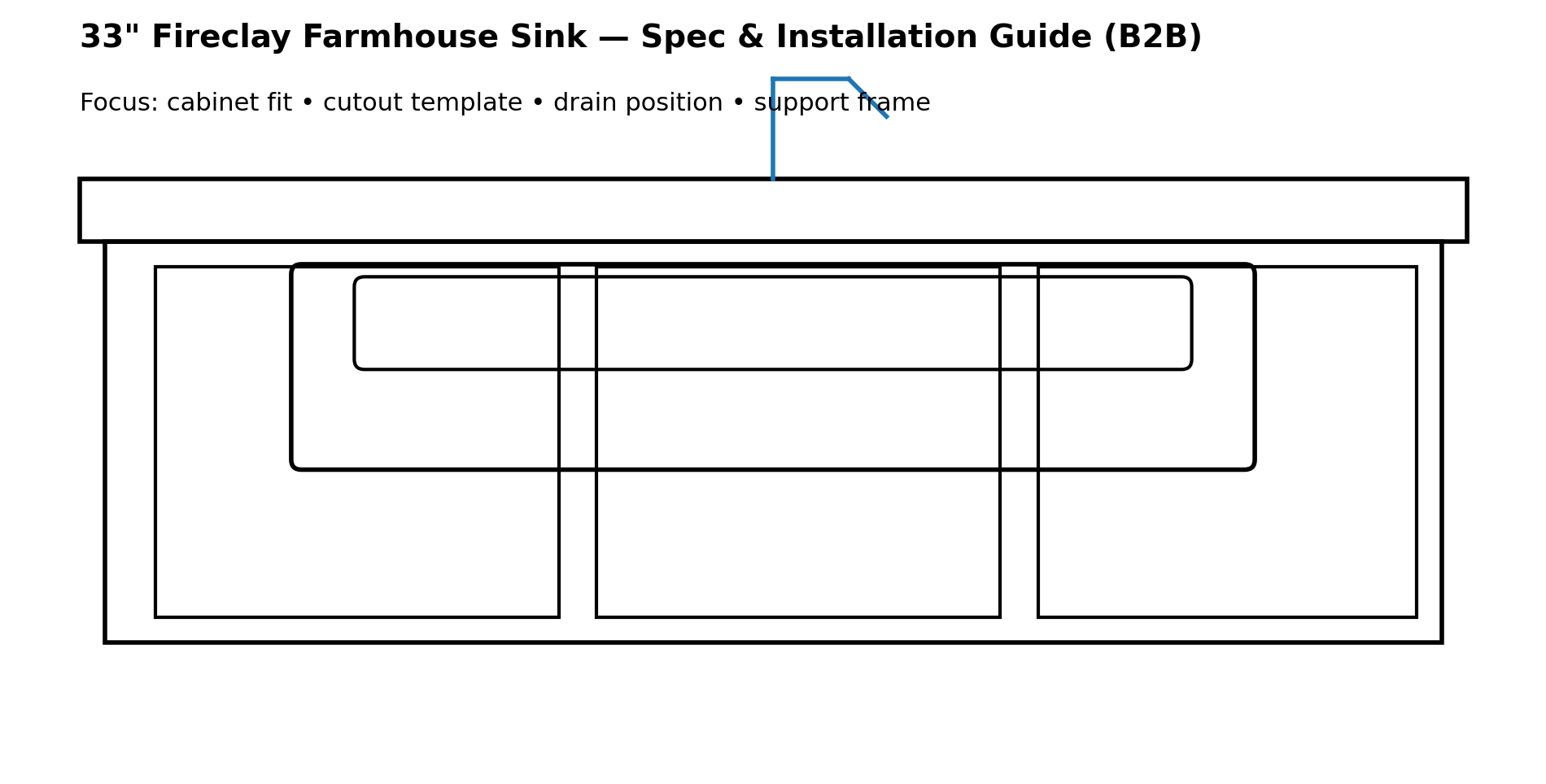
“33 inch” typically refers to the overall rim/apron width side to side. Installation success depends on the actual sink drawing, not the nominal size.
For procurement, lock the decision by SKU with:
- Overall width (side to side) and depth (front to back)
- Apron front height and apron geometry (apron front sink exposure)
- Bowl depth and underside clearance for the drain assembly
- Corner radii (rounded corners vs tight corners)
- Installation method notes (apron front vs undermount support strategy)
Buyer takeaway: a 33-inch label is not a spec. Treat the drawing + template pack as controlled project documentation.
2) 33 inch farmhouse sink cabinet size: cabinet opening is the decision variable
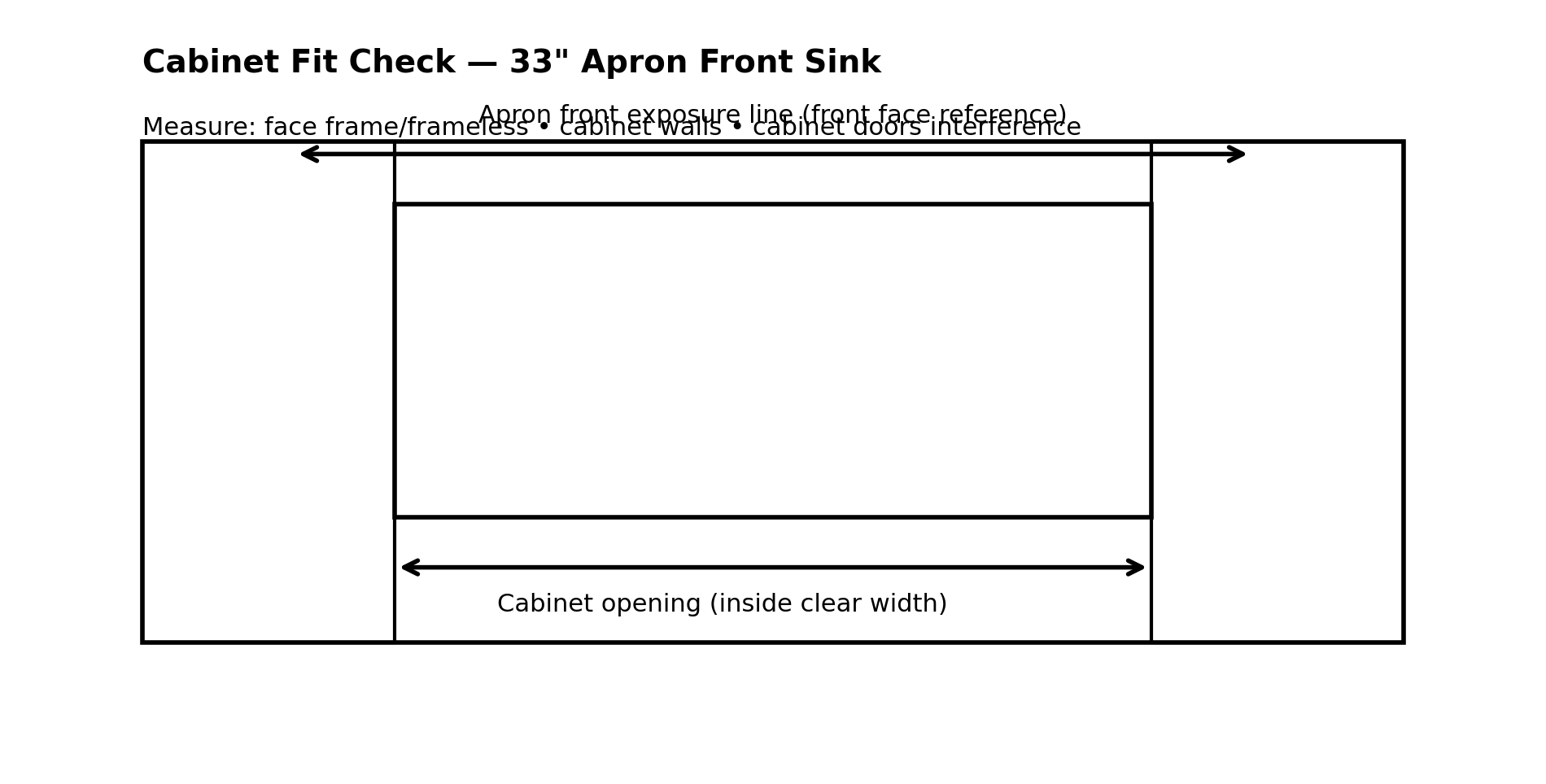
For a 33 inch farmhouse sink cabinet size, many programs default to 36” base cabinets. That is often practical, but it’s still a shortcut. The decisive value is the cabinet opening and internal constraints.
What you must verify before confirming the SKU
- Cabinet opening (inside clear width between cabinet walls / face frame rails)
- Cabinet construction: face frame vs frameless (face frame reduces usable opening)
- Interference risks from cabinet doors, false drawer fronts, and hardware
- Front-to-back clearance for plumbing and disposal
- Structural plan: whether a support frame is required (recommended for fireclay sinks)
New build vs existing cabinetry (risk profile)
- New build: base cabinets and countertop can be designed around the sink.
- Existing cabinetry retrofit: you inherit cabinet cuts, cabinet face constraints, and fixed plumbing rough-in. This is where delays and rework occur.
Procurement rule: for retrofit jobs, request cabinet opening measurement + cabinet type (face frame/frameless) before locking the model.
3) Farmhouse sink cutout template: treat it as a controlled deliverable (stone countertops included)
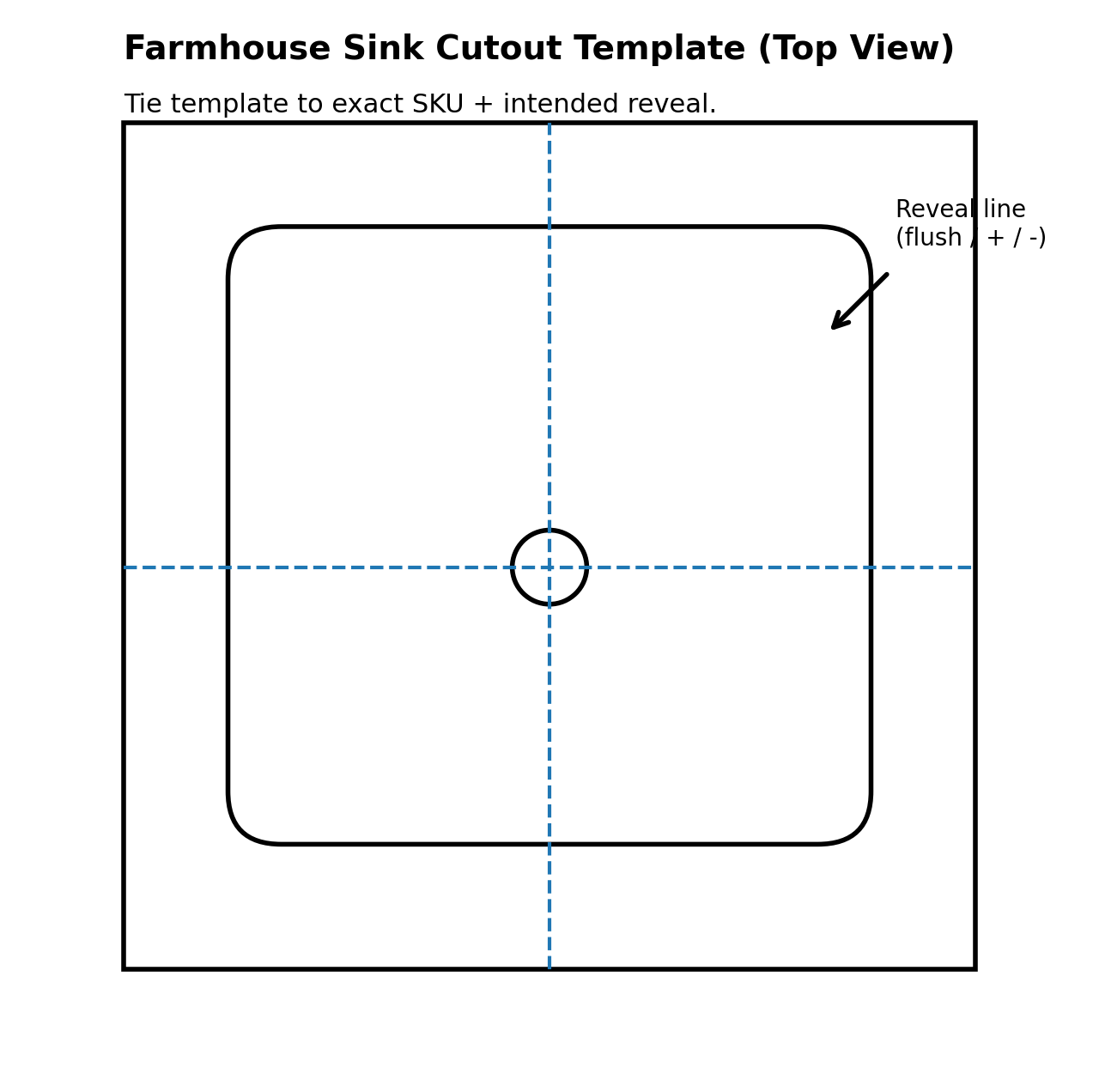
A farmhouse sink cutout template is not optional when buyers use stone countertops (granite/quartz/stone). The most common rework scenario is a fabricator using the wrong template or cutting to the wrong reveal.
Cutout decisions that drive success
- Reveal choice: flush / positive / negative
- Corner radius compatibility (rounded corners affect tooling and finish line)
- Front apron interface detail (how the stone meets the apron front)
- Tolerance notes for installation variance (critical for fireclay sinks)
The stone shop reality
Stone fabricators typically require:
- Top-view cutout drawing (template)
- Corner radii notes
- Reveal intent
- Support/mounting method notes (so the sink is supported correctly beneath the stone)
Buyer takeaway: do not use “one generic 33 inch template.” Tie the template to the exact SKU and your intended install method.
If you are selecting models for a repeatable sourcing program, start from the SANIKB 33 inch farmhouse sink collection and bind each SKU to its own controlled template file.
4) Drain position farmhouse sink: center vs offset is a plumbing decision, not a cosmetic one
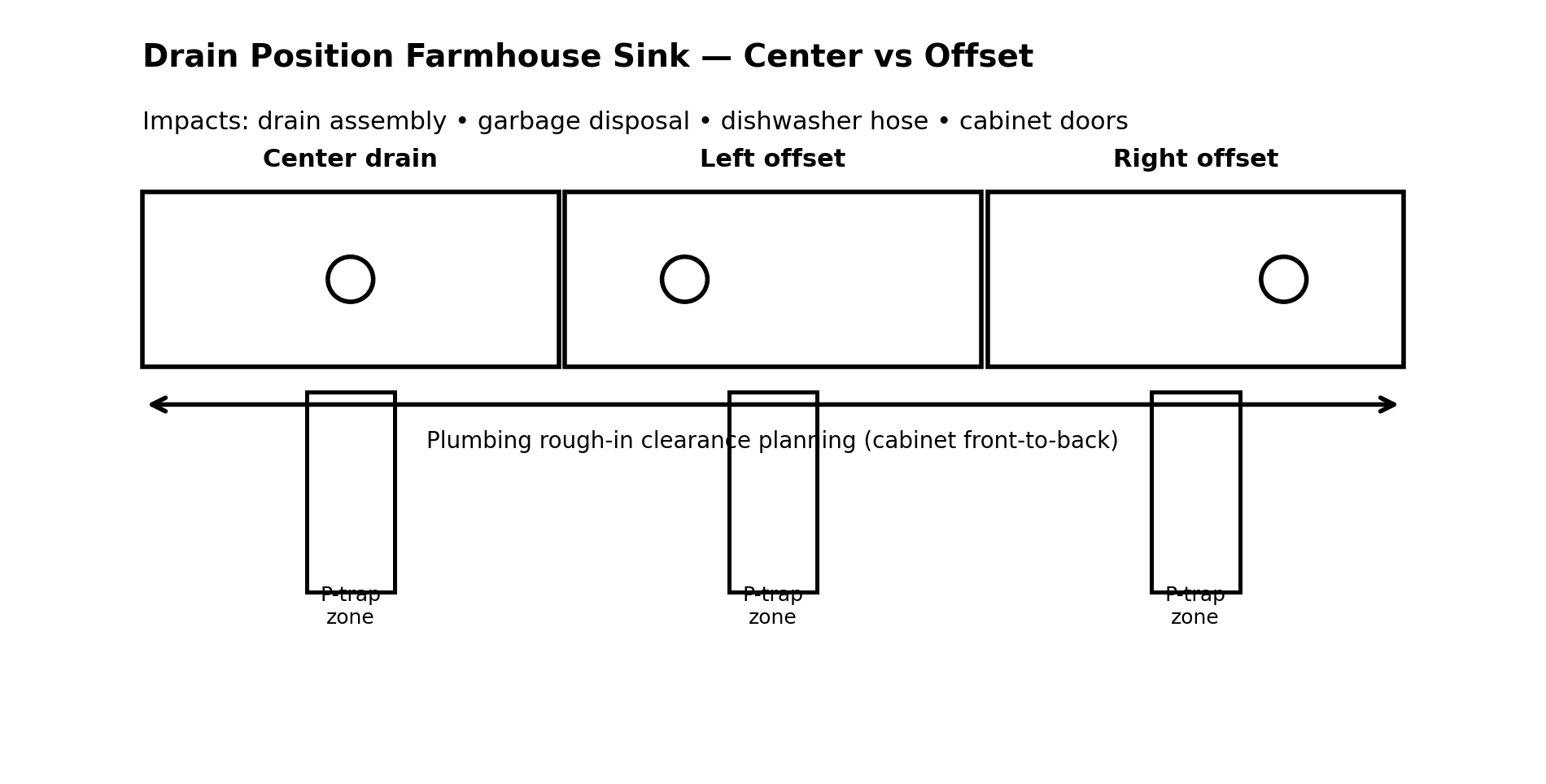
Drain position farmhouse sink impacts:
- Drain assembly stack height and clearance
- Garbage disposal fitment
- P trap routing and rough-in alignment
- Dishwasher hose routing
- Cabinet storage space and door interference
Center drain (most universal)
- Lower friction for new build
- Often simpler for symmetrical cabinet layouts
Offset drain (left side / right side)
- Can improve cabinet utility and reduce interference with internal supports
- Can reduce collisions with disposal bodies in some layouts
- Higher risk in retrofit when the rough-in is fixed
Buyer checklist before confirming drain position
- Rough-in drain centerline position (in-wall)
- Disposal requirement (yes/no + size range)
- Cabinet constraints (center brace, support frame members, doors, drawers)
5) Farmhouse sink installation: support frame is the most controllable approach
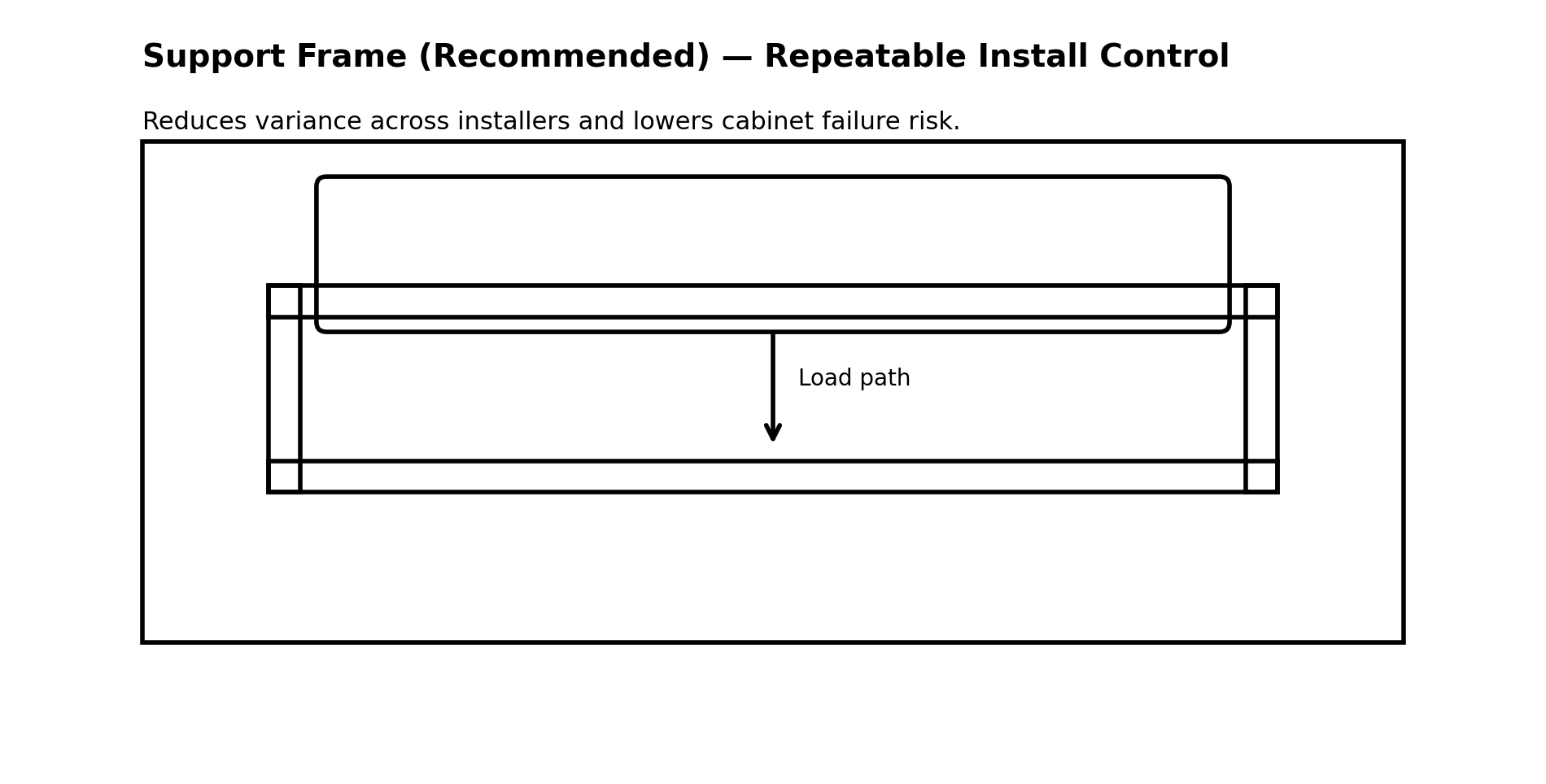
A fireclay farmhouse sink is heavy. If it’s supported incorrectly, the failure typically shows up as cabinet stress, countertop gaps, recurring seal issues, and higher liability exposure.
Support strategies you will see
- Support frame (recommended): repeatable across installer teams, lower variance
- Side rail cleats: installer-skill dependent, higher variance
- Bottom platform: acceptable only if engineered with correct load distribution
B2B rule: if you want consistent installs across multiple projects, specify a support frame (or a controlled support method) as part of your standard.
Garbage disposal + drain assembly: where “perfect fit” claims break in the field
When buyers specify garbage disposal, the most common failure points are:
- Disposal body hitting cabinet back or cabinet walls
- P trap sitting too high or too far forward
- Drain assembly clearance not planned
- Cabinet doors / tilt-out hardware colliding with plumbing
Control points you can standardize in your install pack
- Minimum underside clearance requirement
- Approved disposal size envelope
- Drain assembly spec and stack height notes
- Plumbing routing envelope (front to back and side to side)
This is where controlled documentation outperforms “installer preference.”
Retrofit risk: replacing an old sink in existing cabinetry
Replacing an old sink in existing cabinetry is not a simple SKU swap. You need a controlled workflow to reduce rework:
- Measure cabinet opening and record cabinet type (face frame vs frameless)
- Confirm countertop material (stone countertops require strict template control)
- Inspect for previous water damage around cabinet face and cabinet walls
- Confirm rough-in position and disposal requirement before locking drain position
Buyer takeaway: retrofit orders require more documentation than new build. Treat them as a controlled project, not a catalog selection.
Accessories and BOM discipline (avoid mismatch and claims)
For B2B supply, define what is included vs sold separately, per SKU:
- Bottom grid (stainless steel)
- Drain assembly / strainer
- Cutting boards or workstation accessories
- Installation guide pack and template files
A standardized BOM prevents onsite substitutions that create failures and disputes.
To align model + accessory fitment, reference the specific SKUs under the SANIKB 33 inch farmhouse sink collection.
FAQ
Does a 33 inch fireclay farmhouse sink require a 36” base cabinet?
In most programs, 36” base cabinets reduce risk, but the decision should be controlled by cabinet opening and cabinet construction. Face frame cabinets often reduce usable opening and require stricter verification.
Can I use one farmhouse sink cutout template for all 33 inch models?
No. Rim geometry, corner radii, apron front profile, and flange thickness vary by SKU. Tie the cutout template to the actual sink drawing of that specific model.
Which drain position farmhouse sink option is lower risk: center or offset?
Center drains are more universal for new builds. Offset drains can improve cabinet utility and reduce collisions with disposal bodies, but they increase retrofit risk when rough-in plumbing is fixed.
Will a garbage disposal fit under a 33 inch fireclay farmhouse sink?
It depends on underside depth, drain assembly stack height, and cabinet front-to-back clearance. Treat disposal as an engineering constraint and document the approved disposal envelope.
What is the most common failure point in farmhouse sink installation?
Cabinet support planning. Without a controlled support method (often a support frame), installer variance increases, driving rework and water damage exposure.
Next Step for Sourcing
If you want a repeatable sourcing program for 33-inch apron front sinks, start from a controlled model list and lock: cabinet opening requirements, template files, drain position standards, and support method. Review available configurations here: 33 inch farmhouse sink collection.